
Learning to Speak and Code: A Playful AI Workshop with Children in Moaña

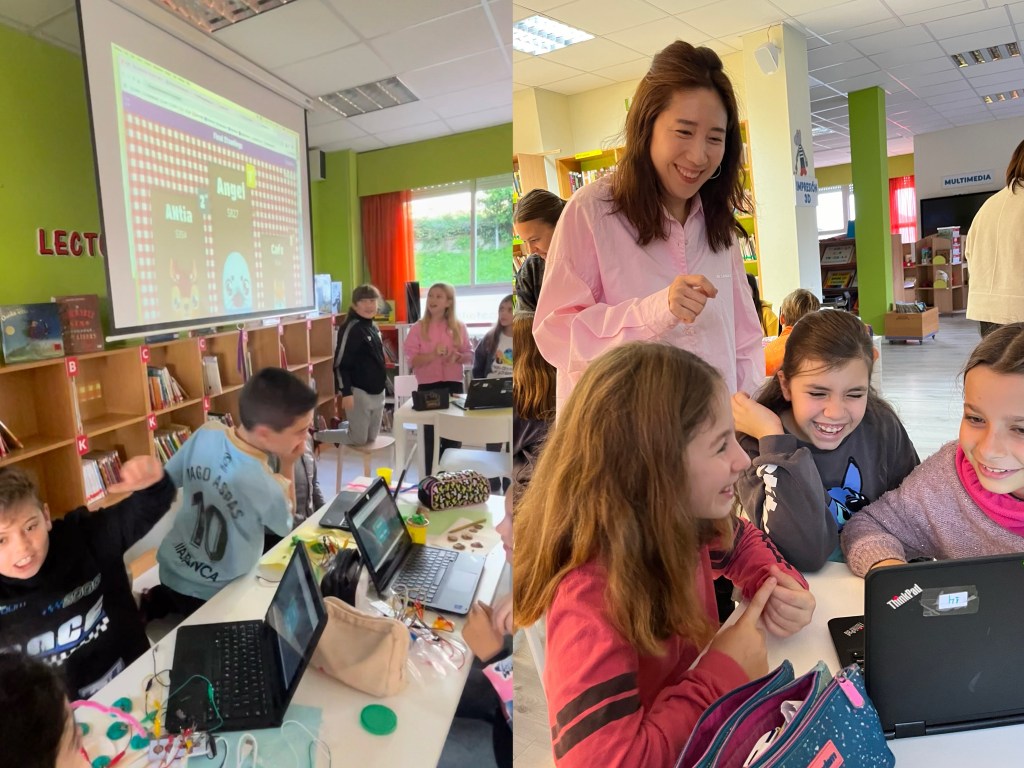

In these workshops held in Moaña, Spain, we visited a public elementary school and worked with 2nd and 3rd grade students to explore language learning through playful, collaborative activities. Our team focused on how AI and voice interaction could support young learners in a maker-centered, constructionist environment. Using Scratch and a web-based machine learning app, students practiced Chinese numbers (1–5) by interacting with voice-activated projects they helped build. Each student trained their own voice model which allowed the program to recognize their pronunciation and respond in real time.
Students used simple microphone inputs to interact with Scratch sprites in real time, saying numbers in Chinese to trigger movements and animations. A web-based machine learning tool was employed to train a small model recognizing each student’s pronunciation, enabling a personalized and responsive learning experience. The session concluded with a lively Kahoot quiz reinforcing vocabulary, where students celebrated their learning with laughter and friendly competition.
Overall, we learned how combining AI, creative coding, and gamified assessment can support language learning and boost student confidence in non-formal settings. Observations suggest high levels of engagement, improved retention of vocabulary, and a strong sense of collaborative learning. This work contributes to a growing understanding of how interactive, voice-responsive technologies can enrich language learning and foster play-based digital literacies.Future plans include adapting these workshops to support additional languages and integrating them into cross-cultural exchange programs, promoting not only multilingualism but also critical and computational thinking through fun, hands-on AI applications.
Co-Constructing Multilingual Learning
in Galician Creative Libraries

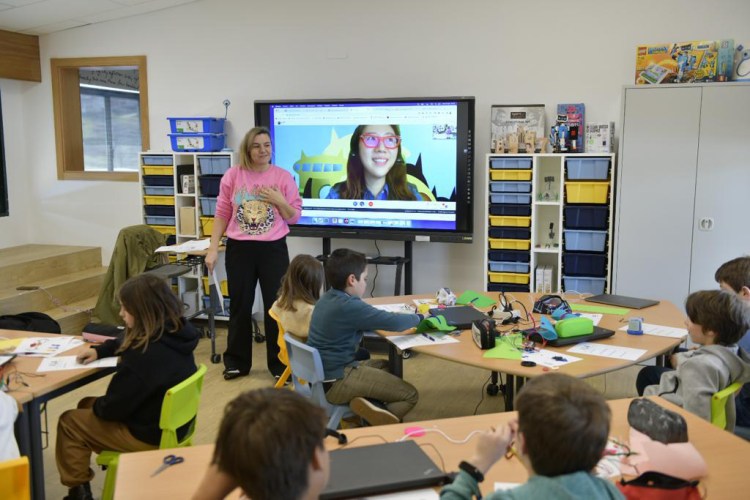
This case study is part of ongoing workshops exploring the benefits of language learning in the context of 21st-century skills. The study investigates the effectiveness of a constructionist approach using craft materials, Scratch, and MaKey MaKey kits to facilitate language acquisition and encourage creativity in children. A creative library workshop was conducted for elementary students in Galicia, Spain, focusing on co-constructing knowledge in electricity and language learning. Preliminary results suggest that combining physical and digital making enhances non-formal language learning opportunities, highlighting creative libraries as ideal environments for fostering maker and STEAM education.
Two workshops were held in two Galician elementary schools with 27 students in total. The workshops included activities like exploring conductive and non-conductive materials, creating bracelets, and using Scratch to play language games. The study observed students’ engagement and learning outcomes, noting increased interest in programming, language acquisition, and cooperative play.
The study emphasizes the importance of integrating technological tools and constructionist approaches in education to promote creativity, critical thinking, and collaboration. Future plans include expanding the workshops to diverse linguistic backgrounds to further explore the benefits of maker space learning for language acquisition and 21st-century skill development.
Using Paper Circuits in Elementary Schools to Promote Understanding of Sustainable Commuting through STEAM Activities
Annually, the Canarian Agency for Research, Innovation, and the Information Society (ACIISI) commemorates the XVI Weeks of Science and Innovation in Canaria, Spain to promote science and technology throughout the islands. The main objective of this project was to raise awareness of the importance of the sustainable development objectives applied in the island context by carrying out a maker challenge involving a paper electrical circuit that sparked the idea of a more sustainable island among participating elementary school students.
The one-day “Light up your idea for sustainable islands” exercise connected 1,026 elementary schoolers from Fuerteventura and Lanzarote, two Canary Islands in Spain, to explore and share ideas regarding more sustainable islands, thereby constructing an electrical circuit. Two weeks prior to the student session, teachers participated in a Zoom-based training workshop led by researchers. The student’s Zoom session consisted of drawing ideas, constructing a paper circuit, and engaging in a discussion. The activities were highly inspiring for the participants, who realized how their paper circuits contributed to the development of sustainable ideas.
The implications of providing Do-It-Yourself (DIY) activities for promoting understanding of sustainability in island development and enhancing elementary schoolers’ interest in STEAM-related subjects are highlighted. Finally, some of the challenges associated with implementing paper circuits in school settings with video conferencing tools and recommendations for future directions are discussed.
Featured on Connected Learning Summit 2022
Full paper is available on Connected Learning Summit Proceedings of the 2022 Connected Learning Summit.
Make, Play, and Learn with GogoMonsters!


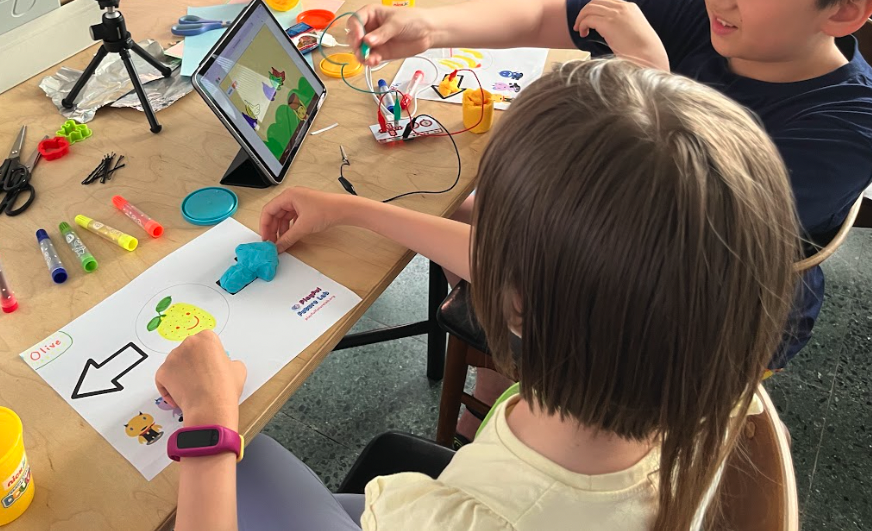
We recently conducted a workshop at Fab Cafe in Taipei, Taiwan, which was an enriching experience for all involved. The curriculum was designed to introduce fruit vocabulary in Spanish, English, and Mandarin Chinese, integrating it with computational learning tools like Makey Makey and Scratch programming with Gogo Monsters. Our approach was tailored specifically for Spanish-speaking Galician students and Chinese-speaking Taiwanese students, emphasizing English and Chinese language skills respectively. By actively engaging students in adapting a game, we facilitated critical thinking and language acquisition.
The workshop was divided into four major steps:
1. We started by setting the workshop’s objectives and assessing the children’s prior experience with computational kits and their knowledge of English and Chinese through an oral survey.
2. Students explored conductive and non-conductive materials through hands-on experiments.
3. They connected these materials to Makey Makey devices and played a Scratch game to enhance their language skills.
4. They were encouraged to modify or ‘hack’ the game code to suit their preferences, allowing for personalized learning experiences.
This game was carefully designed to introduce a range of fruit vocabulary from simple to more challenging words in English, Chinese, and Spanish. The creativity continued as students designed and created their own paper bracelets, incorporating conductive materials. Integrating soft controllers within a STEAM educational framework, this workshop showcased how conductivity and craft can be combined to foster a blended learning environment. This method aligns with the constructionist theory, advocating for active, experiential learning to provide a comprehensive educational experience. We observed the high level of student engagement and their enthusiastic participation in creating and modifying the game were promising indicators of the potential depth of understanding and knowledge acquisition achievable through such interactive methods.
The Sound of Colors:
Makey Makey and Kandinsky
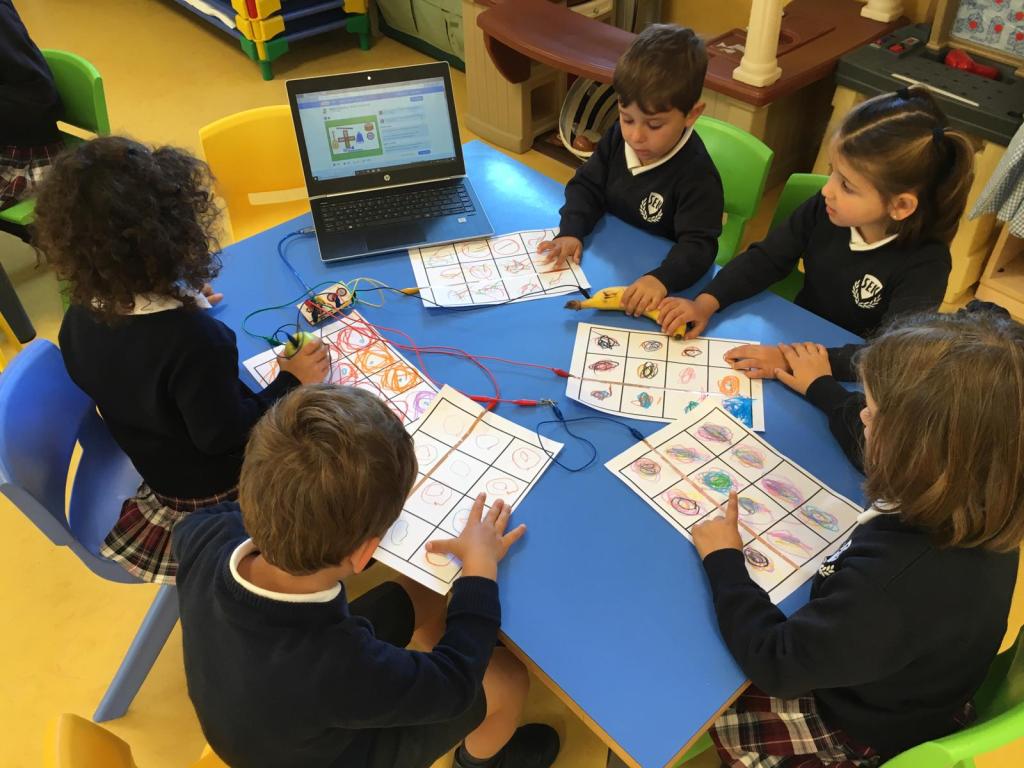

This activity was created and directed by Paola Guimerans, the co-founder of Playful Future Lab. This workshop allowed the boys and girls to get closer to abstract art and develop their musical sensitivity by exploring different sounds and notes of musical instruments using the Makey Makey plate.
The objective of the activity is that young children can discover in a playful way of learning thoughts and work of Wassily Kandinsky. Also, children begin to tackle the Makey Makey board. Through investigation and experimentation, they discover basic concepts of electronics and conductivity.
The complexity of literacy proficiency using the Web is a puzzle for educators these days. Emergent literacy During the activity, they immersed themselves in reading the book, The Sound of Colors, by Barb Rosenstock, where they discovered the life of Kandinsky and the influence of music on his painting, and later made their own musical creation.
How do we teach programming to children?
Teachers, parents, and caregivers can begin by simply talking with children about their future dreams and interests. Asking questions like What do you want to be when you grow up? or What kinds of things do you enjoy making or solving? opens the door to meaningful conversations. From there, adults can gently introduce the idea of programming by asking what children think programmers do and where coding might show up in everyday life.
Children often imagine programmers as people sitting alone writing complicated code, so it helps to broaden that picture. Programming is used in music, art, games, medicine, transportation, fashion, social media and so much more. By showing examples children already recognize such as video games, animation, apps, or smart toys, adults can help them see that coding is a creative tool, not just a technical skill. This is where the idea that coders are rockstars really matters. Coders build things that people use, enjoy, and depend on every day.
It is also important to emphasize that anyone can be a programmer. Coding is not about being born “good at computers” but about curiosity, practice, and problem solving. Learning to code can feel intimidating at first, just like learning a new language or instrument. Children may make mistakes, feel stuck, or think they are not doing it right. Adults can normalize this by reminding them that confusion is part of learning and that every programmer starts as a beginner.
Source: code.org
Exploring New Languages with Makey Makey


Third-grade students at a public elementary school in Galicia, Spain participated in a workshop taught by our lab’s co-founders, Paola Guimeráns and Iva Li. We worked with Scratch on the MaKey MaKey board. With Scratch, they learned to program and with MaKey MaKey they manipulated and connected conductive objects and used it as an alternative keyboard. Using everyday materials, they modified or hacked a game “Language fruit picking” to learn vocabulary in English, Spanish, and Mandarin Chinese simultaneously.
Español: http://bibliobreasegade.blogspot.com/2021/04/makey-makey-e-aprendizaxe-de-idiomas.html?m=1
Advantages of Familiarizing with
Virtual Literacy in Early Years
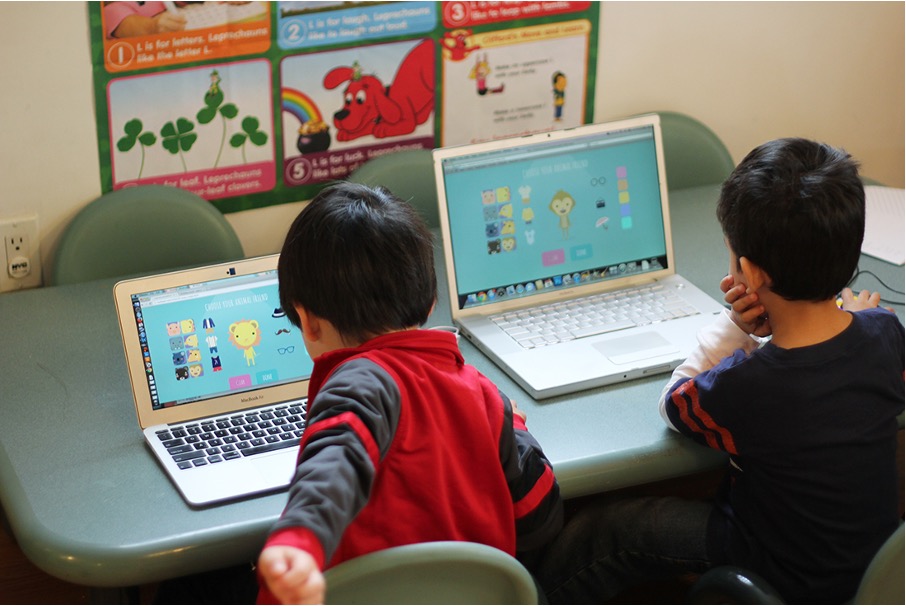
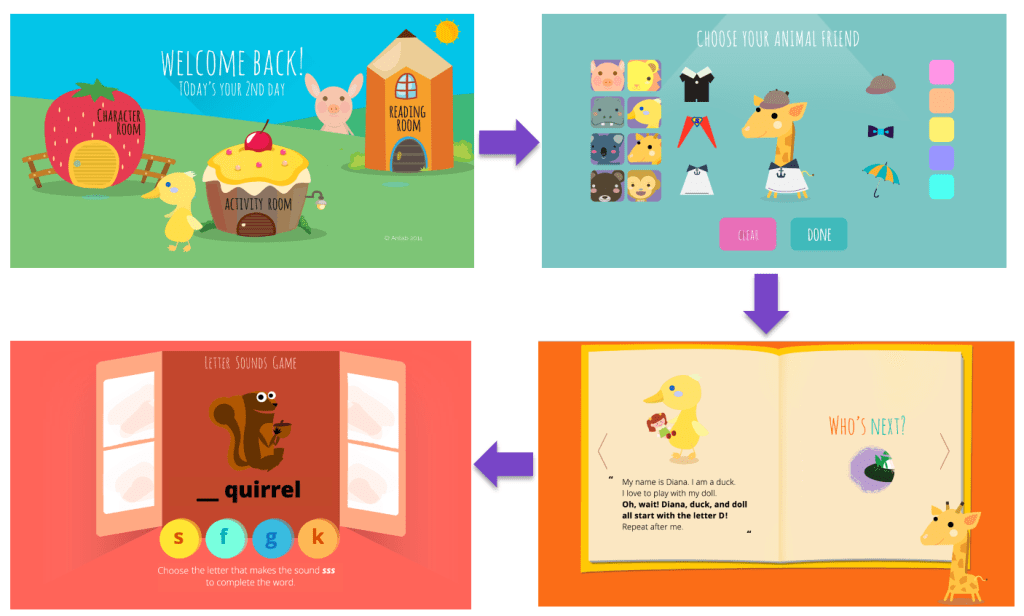
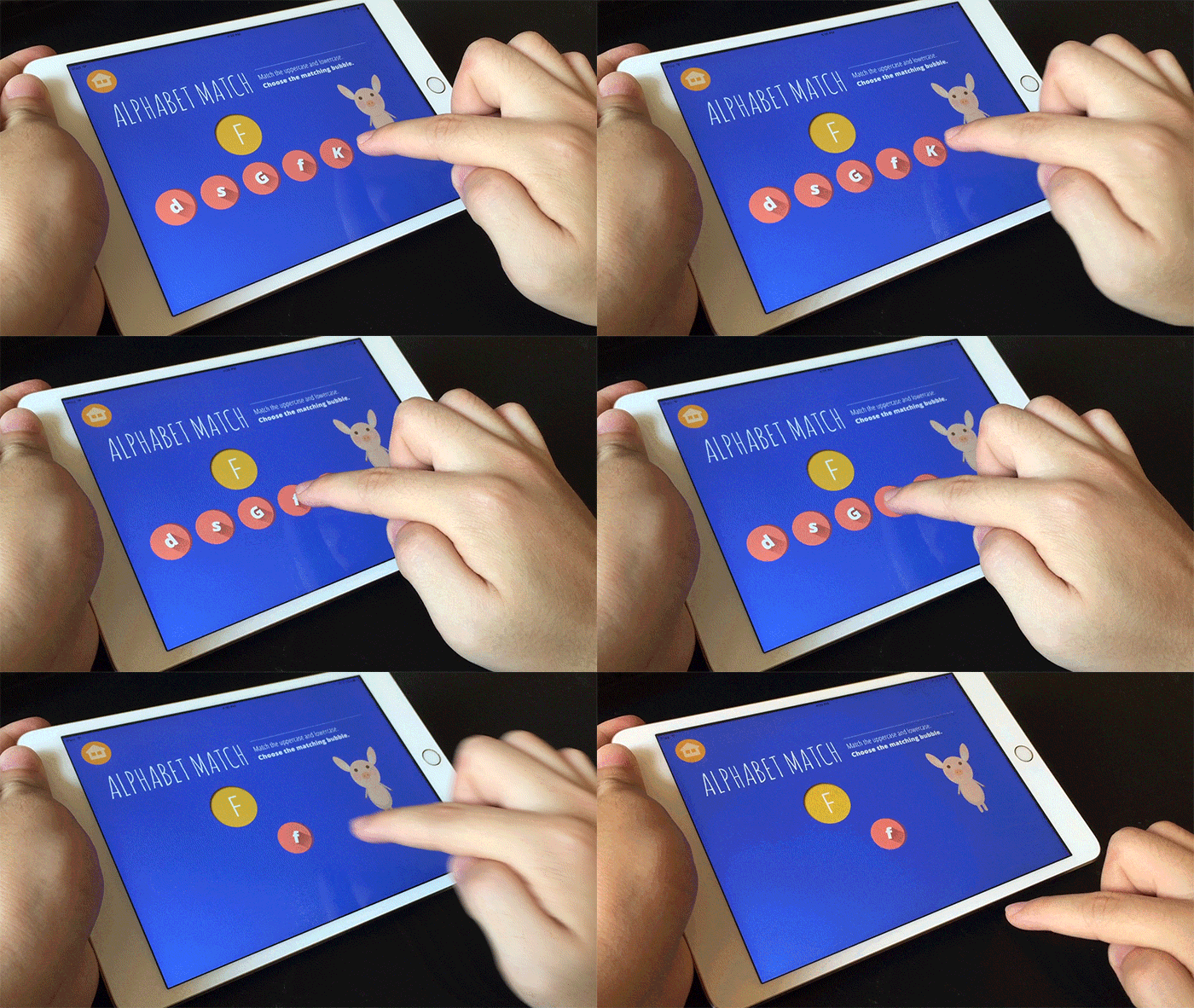
In this Information Age, children can hardly avoid going online to socialize and learn from digital content at home and in school. This can greatly impact children’s developmental well-being. The number of young children aged between 2 and 9 who spent their time on the Internet and social media sites increased 63% between 2004 and 2009 (Nielsen, 2009). Therefore, changes in children’s literacy development have been happening, and we can’t stop children from going online.
Virtual literacy provides opportunities for children with disabilities and from low-income families. Home Internet helps children with reading, especially for low-income African-American children. Young users can write e-mails, comment on a blog, and communicate with others via texting, emailing, chatting, or using virtual communities like Club Penguin, which is run by Disney and targets children aged 5-8. The literacy experience establishes and maintains social relationships, displays information, expresses identity construction, and helps users gain pleasure.
Major activities in Club Penguin are 28% playing games, 22% reading the Penguin Times or books at the library, 7% writing cards or chatting, and 2 % shopping. Gillen’s study included 13 months of observing a virtual island called Schome Park, where teenagers created an avatar and lived and played in the space, and concluded that online chat forums and a wiki were advantageous in terms of literacy development. Parents support their children’s online activities because of their children’s opportunities to have conversations with others about various topics, not only about television and video games but also printed media. The attraction of digital media doesn’t necessarily disregard the importance of print media; therefore, the parallel development between those two is crucial for young audiences.
Follow Our Blog
Get new content delivered directly to your inbox.
© Copyright 2026 Playful Future Lab

 Playful Future Lab